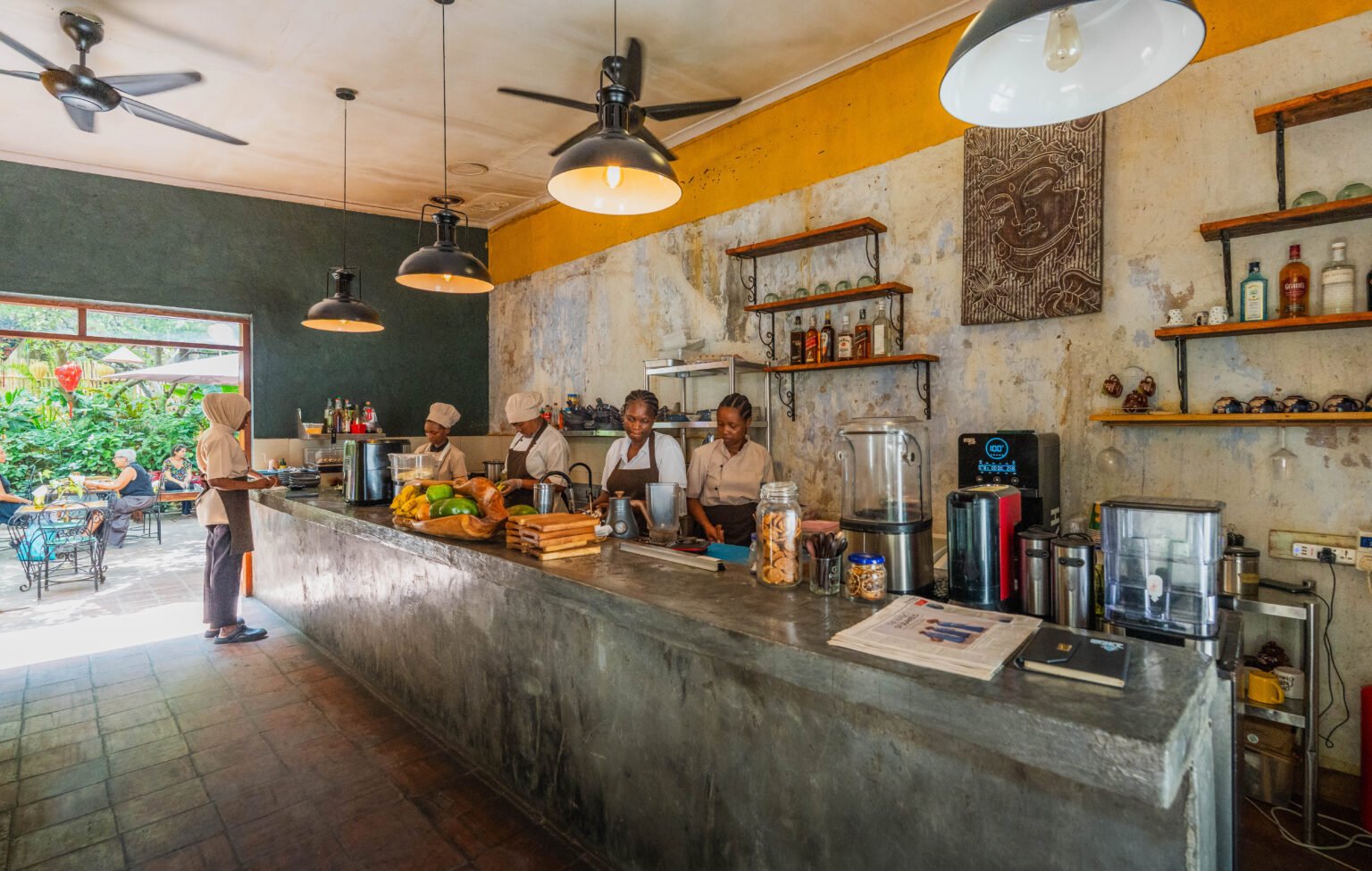
The Bar
Slow phin coffee and refreshing, creative signature coffees. A cold beer for a quick stop, or a nice glass of wine for a longer dinner.
Vietnamese coffee in Stone Town, with Tanzanian beans
Coffee came to Vietnam with French missionaries. The first Arabica trees did not like our weather very much.
So farmers planted robusta in the red soil of the Central Highlands, around Buôn Ma Thuột. It grew well, and it stayed.
Almost all Vietnamese coffee is robusta. Strong, a little bitter, and perfect for a slow drip with sweet milk.
Here we use beans from Zanzibar Coffee House in Stone Town, grown on their Utengule estate in Mbeya, in the southern highlands of Tanzania. The Vietnamese way, with Tanzanian beans — I love this mix.
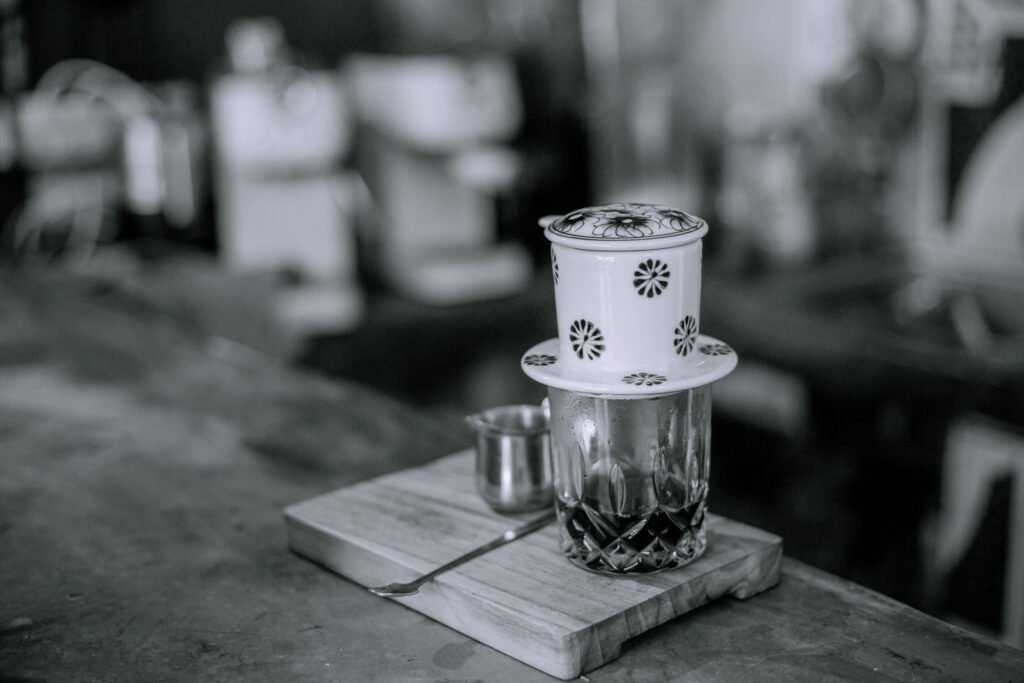
How we make phin coffee
No big machine. Just a small phin filter sitting on the glass, and a little patience. This is how most people in Vietnam make their coffee, at home and on the street — and this is how we make it for you here in Zanzibar.
- Milk firstSweet condensed milk at the bottom of the glass. Fresh milk was hard to find in Vietnam back then, condensed milk kept well — and we never stopped loving it.
- Wake up the coffeeCoffee in the phin, a little hot water first to let it bloom, then the press, then fill it up.
- WaitDrop by drop. Don’t rush it. Stir it long, pour it over ice, and you have cà phê sữa đá.
Why we put egg in our coffee
In 1946 there was no milk in Hanoi because of the war. A bartender at the Metropole Hotel, Mr. Nguyễn Văn Giang, whipped egg yolk with sugar and put it on top of his coffee. That was the first egg coffee, and his family still serves it in the Old Quarter today.
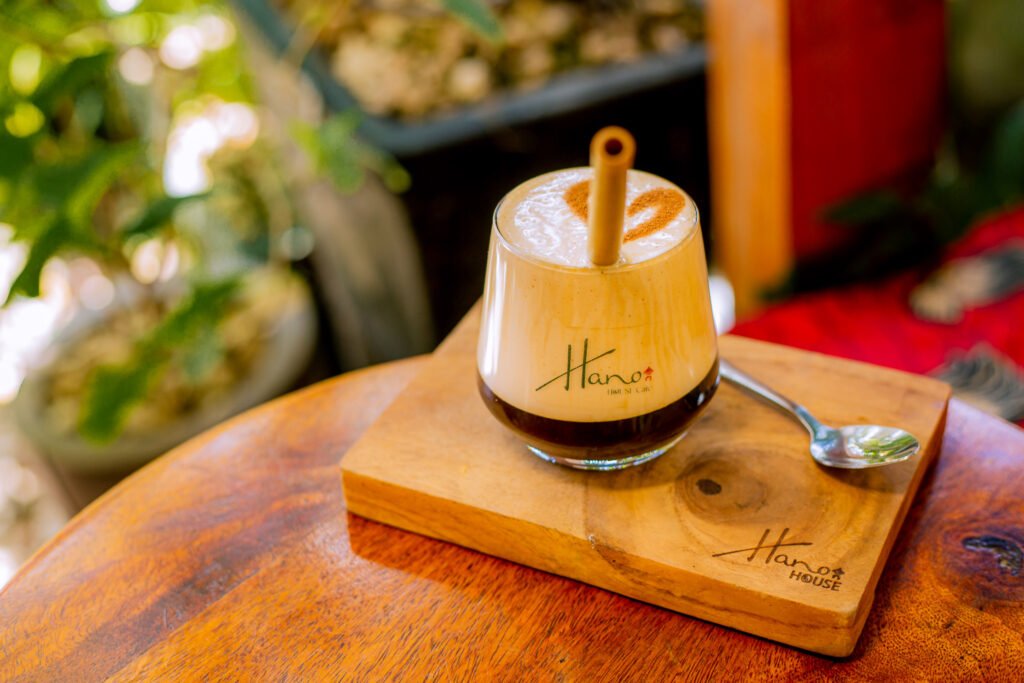
Our signature coffees come from the same idea: use what you have. Here we have coconuts, so we make our own coconut milk every day. And we live on a spice island — so of course there is a five-spice coffee.
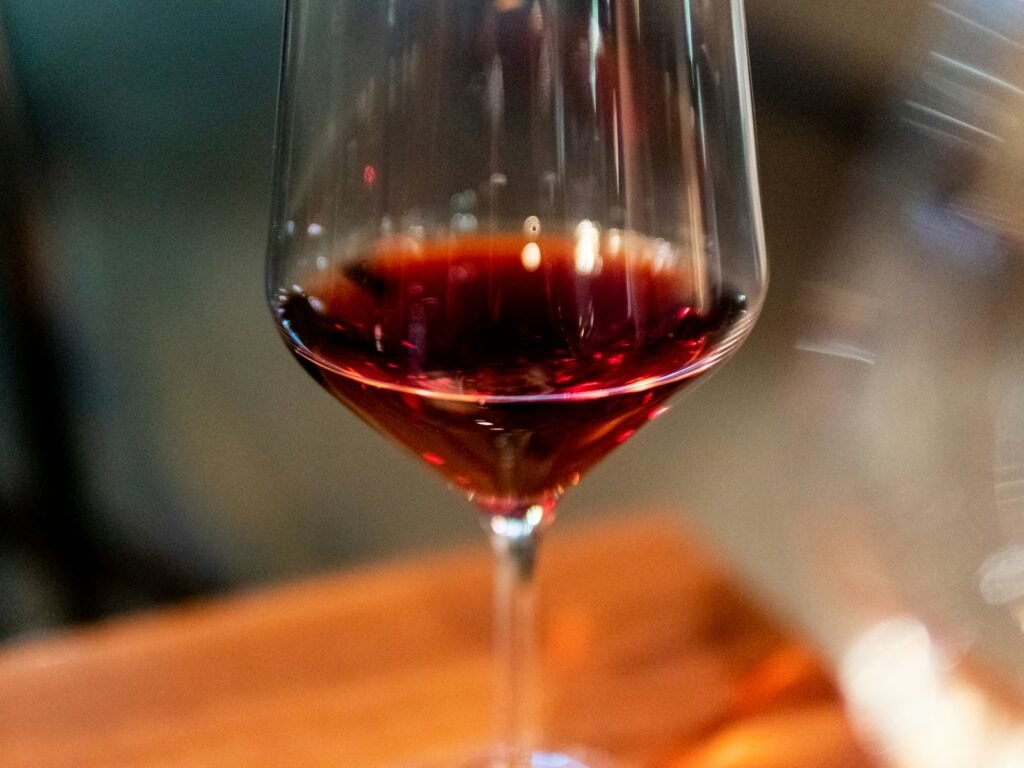
A cold beer, or a glass of wine
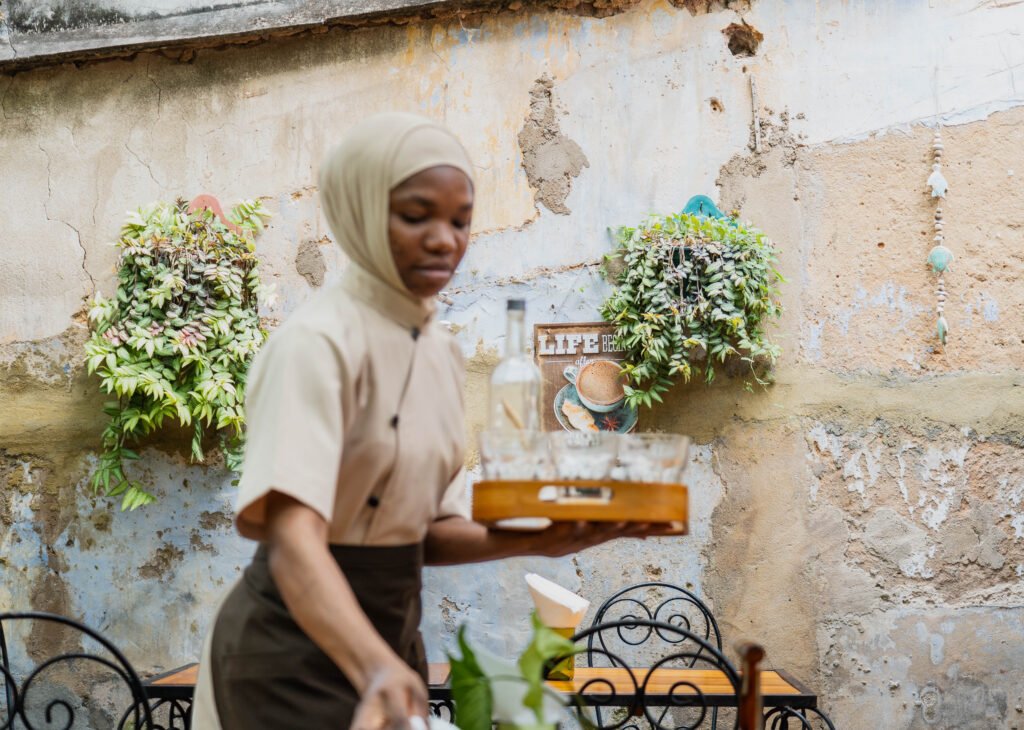
After a long walk through the lanes of Stone Town, sometimes you just need to sit down. Find a chair in the courtyard, order something cold, and let the day slow down.
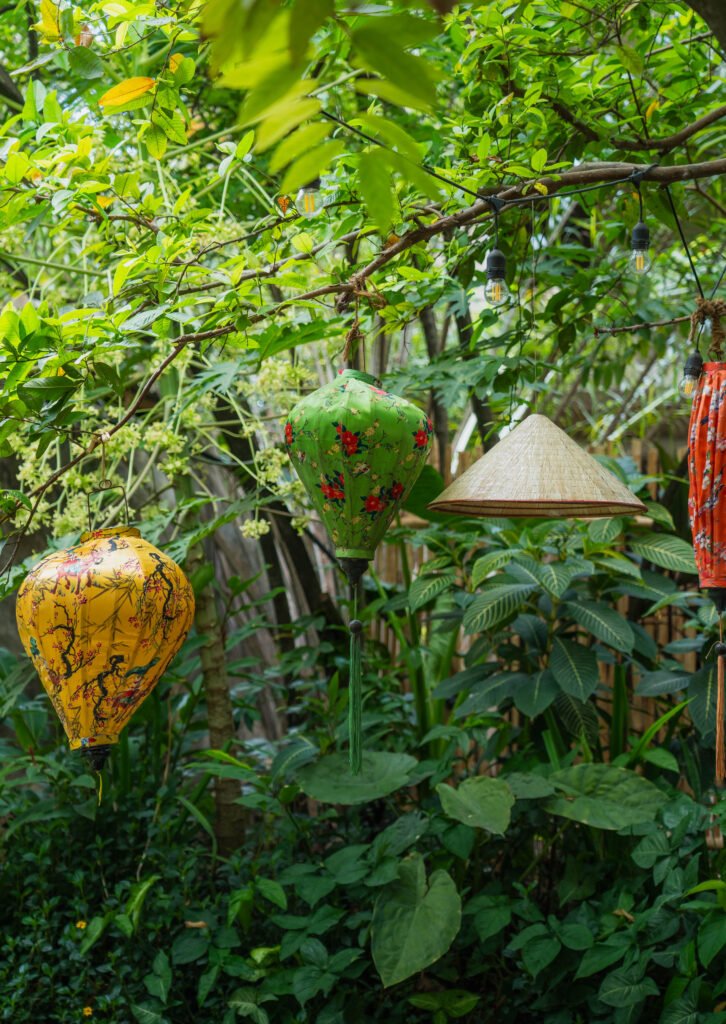
In the evening the lanterns glow and the house gets a little quieter. Friends stay for dinner, someone orders a second glass of wine, and nobody looks at the time. That is the Hanoi House I wanted to create — not a bar you rush through, but a place where you stay a little longer.
Our wines change often, so just ask us what we have today.
Bar 11:00 – 22:00
Between 16:00 and 17:00 our kitchen takes a short break to restock. The bar stays open — come for a coffee.
 Find us
Come Find Us in Stone Town
Look for the carved wooden door on Cathedral Street, a few steps from St Joseph’s Cathedral and the Old Fort.
- Bar — daily, 11:00–22:00
- Kitchen — 11:00–16:00 and 17:00–22:00
- Call or WhatsApp — +255 772 434 995
- Email — xinchao@kimdiningconcept.com